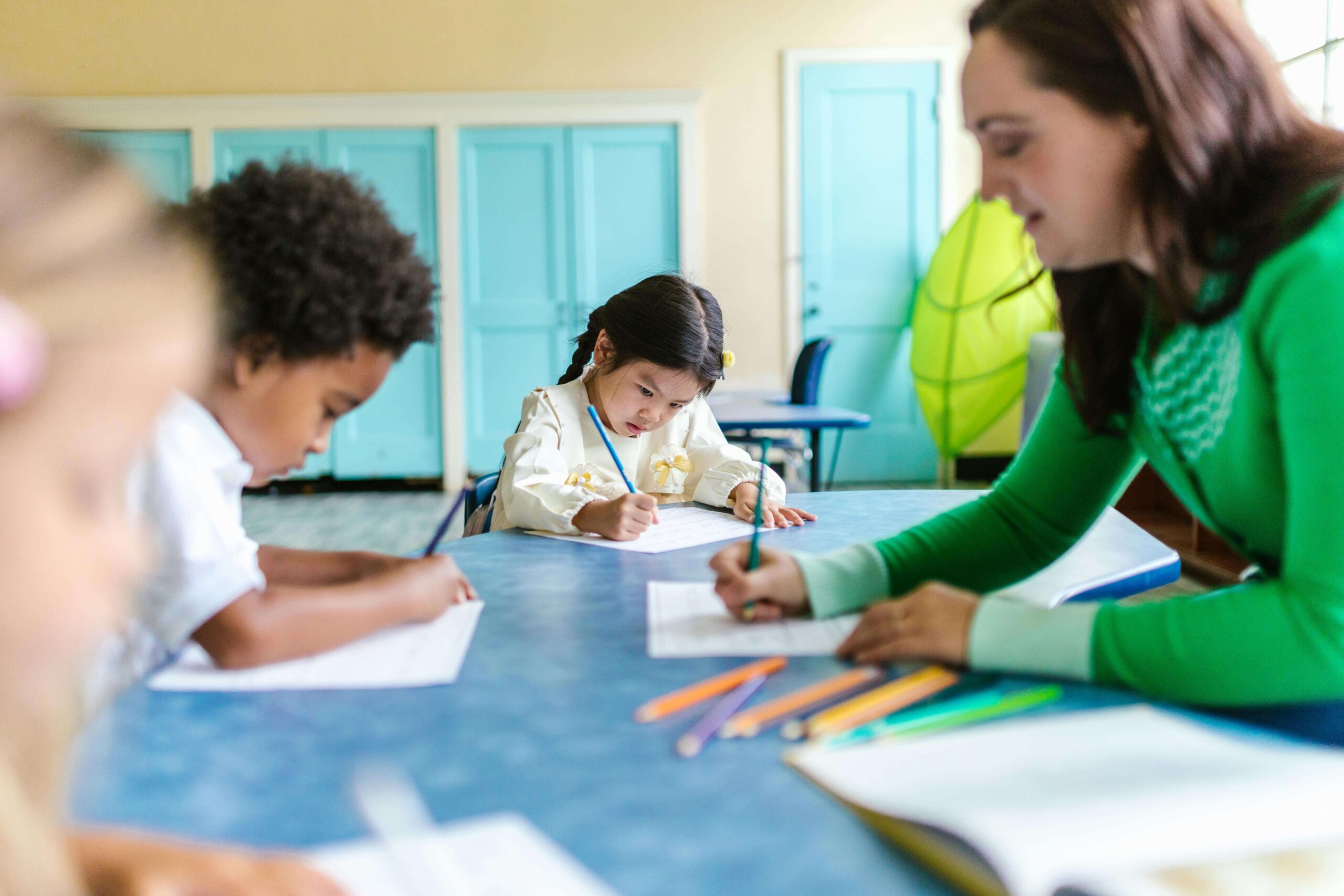
When people think about early writing, they often picture tracing worksheets, pencil grips, or children learning to write their names. But in a culturally responsive, play-based Pre-K setting, writing doesn’t start with letters; it begins with meaning.
Emergent writing is the foundation of early literacy. It’s the stage where young children begin to understand that their marks, scribbles, and symbols can carry ideas, emotions, and identity. Before a child ever forms a proper letter, they are already writers.
With your learners, writing shows up in unexpected places inside block structures, on grocery lists in dramatic play, or alongside a drawing of grandma’s house. These early forms of writing reflect more than skill development; they reveal how children are processing their world, navigating their feelings, and expressing themselves in ways that matter.
When we recognize emergent writing as a tool for both communication and connection, we shift the goal from correctness to confidence. This post explores what emergent writing looks like in Pre-K and how we can support it in ways that honor every child’s voice.
What Is Emergent Writing (And Why It’s Bigger Than Pencil Grips and Writing Names)?
Emergent writing refers to the early stages of writing development that happen before children use conventional spelling, grammar, or even consistent letter forms. It’s what writing looks like when children are just beginning to understand that their marks have meaning and that they have something to say.
But it’s not just a stage to get through. It’s where writing, identity, and emotion start to meet.
Emergent writing gives us a glimpse into how children process their world, share personal experiences, and experiment with communication. It’s not always neat, and it rarely follows rules. But it’s purposeful, individual, and worth paying attention to.
Here are some common forms of emergent writing you’ll see in your learners:
- Scribbles with meaning: Lines or loops that a child names as a message (“This is for my cousin”)
- Random letter strings: Unrelated letters that hold meaning for the writer (“That says ‘go away,’” even if it doesn’t)
- Letter-like forms: Symbols that mimic letters in shape but not accuracy
- Drawing + labeling: Pictures that include names, captions, or invented words
- Repetitive name writing: Children writing their name or their interpretation of it over and over again
- Home language symbols: Characters, sounds, or marks pulled from their family’s primary language
- Mixed-media storytelling: Stories told through writing, pictures, stickers, tape, or objects
These early marks are not “pre-writing.” They are writing. They tell us what a child notices, remembers, and feels. And when we respond with curiosity instead of correction, we show children that their ideas matter even before their letters are “right.”
How Emergent Writing Shows Up in Real Play
Emergent writing isn’t limited to the writing or dramatic play center. It happens across every part of the learning environment, wherever children are making choices, telling stories, or sharing their world. Whether you’re in a classroom or at home, here’s what that might look like:
🧱 Block Center (or building play at home)
A child draws a simple “blueprint” before building or adds signs to label their creation: “my dad house” or “store open.” Sometimes it’s scribbles; sometimes it’s a few letters, but it’s always meaningful.
What it supports: spatial thinking, personal narrative, labeling with purpose
🍎 Dramatic Play
Children write menus, grocery lists, or recipe cards based on their home life, like a note that says “make arroz con leche.” These aren’t assigned; they emerge from lived memory.
What it supports: cultural representation, role play, sequencing, vocabulary
🧪 Science Center (or sensory exploration at home)
A child draws what they see after watching seeds sprout, or tapes a “do not touch” sign on their nature collection. Another pretends to write “what I found” in a mini science journal.
What it supports: observation, descriptive language, ownership of ideas
💧 Sand or Water Table
During messy sensory play, children use waterproof labels or dry erase cards to name items: “mud pie,” “clean boat,” or “stop sign.” At home, this might happen during bath play or kitchen sink science.
What it supports: action words, playful labeling, fine motor strength
✋🏽 Fine Motor Center
Children poke out letters with push pins, decorate envelopes for “mail,” or write names on paper chains. A child might use glue sticks and paper scraps to make a birthday card “for Papa.”
What it supports: coordination, emotional connection, emergent name writing
🔢 Math Center
Learners create number labels for play food, write “tickets” for pretend stores, or jot down made-up phone numbers. They begin connecting numbers and symbols to real-life play.
Emergent writing can (and should) feel open-ended, but that doesn’t mean it lacks structure. Children still benefit from routines, modeling, and tools that help them think like writers and practice being writers, even when their marks are still developing.
What it supports: functional print, symbolic reasoning, routine literacy
🏠 At Home (All Day)
A child scribbles on a notepad while watching a caregiver write a grocery list. They “sign” their name on drawings or mail letters to cousins. Writing shows up in the quiet moments, unexpected but powerful.
What it supports: modeling, identity development, authentic communication
This is where emergent writing thrives, not because we told children to write, but because the environment invites it. And when we recognize these moments, we begin to support writing that reflects the child behind it.
Why Emergent Writing Matters for Culturally Responsive Literacy and SEL
Emergent writing isn’t just about getting ready to spell; it’s about helping children express who they are, how they feel, and what they know about the world around them. When we take a culturally responsive lens, we recognize that those early marks carry personal meaning, and that meaning is deeply tied to both identity and emotional development.
Here’s how it connects:
- Social-emotional growth happens when children are encouraged to share stories from their real lives. Writing about a sibling, a memory, or a feeling isn’t just literacy, it’s emotional processing and connection.
- Confidence and voice are built when children see their own ideas valued, even if the spelling isn’t “correct.” That trust in their own expression lays the foundation for future risk-taking, reflection, and creativity.
- Cultural representation shows up when children draw from their home language, family routines, or personal experiences. Whether it’s writing a pretend recipe from home or labeling a block structure with a relative’s name, those choices reflect who they are, and they belong in the learning space.
- Responsive adults play a key role. When you pause to ask, “What does this say?” or help a child write a note to someone they care about, you’re doing more than teaching a literacy skill. You’re showing them that their emotions, relationships, and stories matter.
Emergent writing is a window into how children feel, what they remember, and how they make sense of their experiences. When we honor those early expressions with intention and care, we’re supporting both culturally responsive literacy and foundational SEL.
How to Support Emergent Writing in Meaningful, Pre-K Friendly Ways
Emergent writing can (and should) feel open-ended, but that doesn’t mean it lacks structure. Children still benefit from routines, modeling, and tools that help them think like writers and practice being writers, even when their marks are still developing.
Here’s how to support real growth while keeping the writing process responsive and age-appropriate:
Make Writing Tools Accessible Everywhere
- Add clipboards, mini notebooks, markers, or chalk to all learning spaces, not just the writing center.
- Use Ziploc bags or bins at home with basic tools that kids can grab during play.
- Keep writing upright too (easels, walls, vertical surfaces build shoulder strength)
Why it helps: Writing becomes part of play, not something “extra” they have to earn
Support Functional Pencil Grasp Without Overdoing It
- Use broken crayons, small chalk pieces, or short golf pencils to encourage a natural tripod grip.
- Model how to hold a writing tool gently, but don’t make grip correction a battle.
- Offer a mix of writing tools: thick markers, twistables, mini pencils, and dry-erase pens for variety.
Why it helps: Fine motor skills develop best through real use, not pressure or drills
Include Name Writing in Routines
- Let children “sign in” every day with their name (or marks that represent their name)
- At home, create a name strip for drawing or “mail” that kids can copy from
- Encourage tracing with dry-erase sheets, but balance with open name exploration.
Why it helps: Builds identity, ownership, and familiarity with letters in a low-pressure way
Dictate Their Stories and Let Them “Write” Too
- After play, ask “What did you build?” or “Want me to write your story down?”
- Scribe their words on the page, then invite them to add marks, drawings, or invented spelling
- Keep paper books handy where kids can start their own series no perfection required
Why it helps: Builds oral language, sequencing, and SEL connections
Model Everyday Writing with Purpose
- Let them see you writing: lists, thank-you notes, meal plans, reminders
- Invite them to join: “Can you write a list too?” or “Want to label this for us?”
Why it helps: Writing becomes meaningful when children understand why we do it, not just how
Pair Writing With Emotion
- Invite children to write a note when they miss someone, feel proud, or are frustrated
- Have them “send” it to a family member or post it in a class mailbox or feelings board
Why it helps: Emotional expression through writing builds early SEL connections
When We Trust the Scribbles, Writing Becomes Personal
When we trust children’s early marks—such as scribbles, symbols, and stories—we’re not only supporting their development as writers but also helping them feel recognized. This kind of writing doesn’t arise from worksheets; it emerges from curiosity, connection, and environments where their voices are valued. In Pre-K, writing isn’t just about what children know; it’s about who they are becoming, a process we observe through every small mark they create.